
Smartwatch training: A tech tool to support movement, health and weight loss
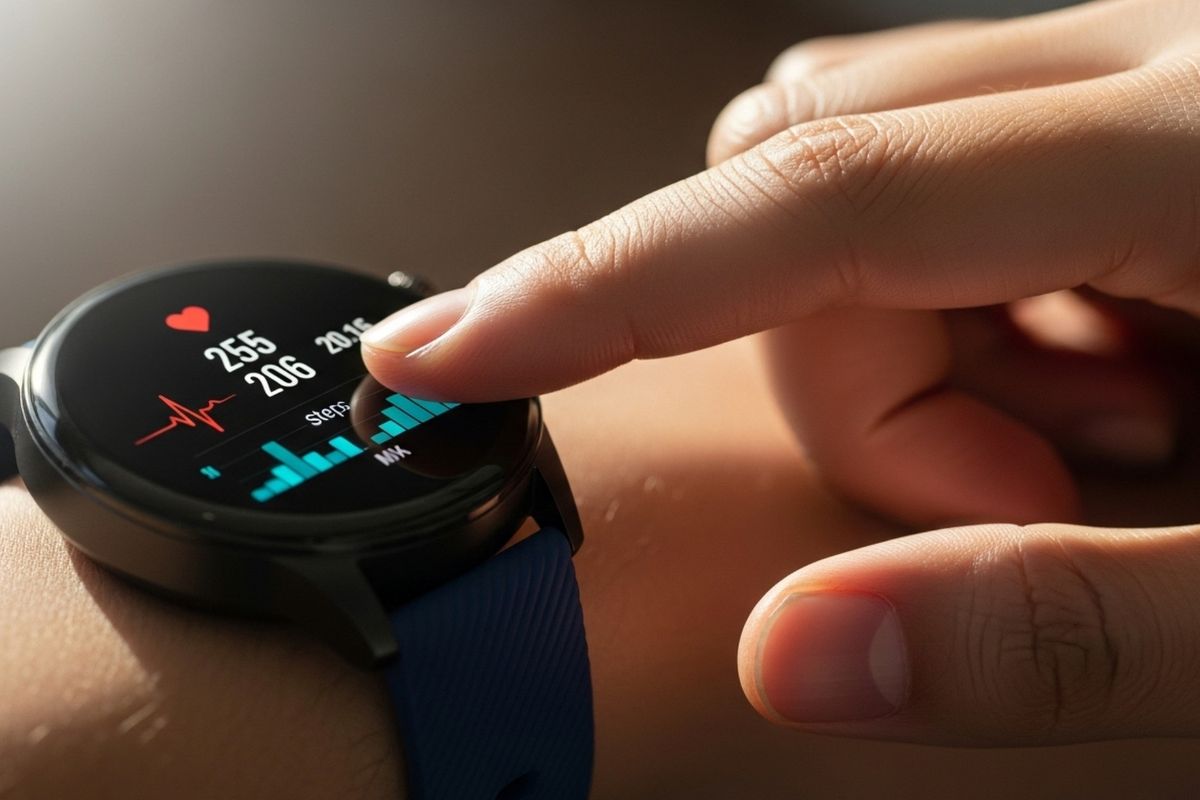
Smartwatches and fitness trackers have become a common way to support exercise and overall health. For many people, a smartwatch can help you become more aware of your movement, sleep and day to day habits. It also works as an extension of your smartphone, letting you see notifications, control music and use apps straight from your wrist. But how can you use a smartwatch in a way that actually feels helpful when it comes to exercise and weight loss?


.svg)
What is a smartwatch and what can it measure?
A smartwatch is a wearable device that can track different types of body and behaviour data. Some models include more advanced features such as ECG, Bluetooth connectivity and real time heart rate and workout stats.
Common features include tracking of steps, physical activity, heart rate, workouts, sleep and sometimes stress levels or blood oxygen saturation. The data is usually collected in an app, where you can follow patterns over time. Compatibility between your smartwatch and mobile phone is important, as the watch often mirrors your phone.
It is worth remembering that the measurements from a smartwatch are estimates. They are designed to give guidance and insight into your movement and health, not exact medical readings.
Using a smartwatch to support exercise
When it comes to exercise, a smartwatch can help you create structure and build consistency. By logging workouts and everyday movement, you may get a clearer picture of how active you actually are. For many people, that can feel motivating.
Smartwatches can also remind you to take breaks from sitting, encourage you to move during the day and help you vary the intensity of your workouts. If you are new to exercise, this can lower the barrier to getting started and make physical activity feel more manageable.
How can a smartwatch support weight loss?
Weight loss is about the bigger picture. Food, movement, behaviours and recovery all play a role. A smartwatch can support this by increasing awareness of things like daily steps and overall activity levels.
For many people, it is the small changes in everyday life that make a difference over time. More steps, regular movement and better sleep can all add up. By tracking these habits, you may start to notice patterns and connections between activity, recovery and how you feel.
At the same time, it is important not to let the numbers become a source of stress. A smartwatch should be a support, not a way to monitor or judge yourself.
Health beyond exercise: sleep, stress and recovery
Smartwatches can also offer insight into sleep patterns and recovery. Sleep plays an important role in overall health and weight regulation, and many people find it helpful to see an overview of their sleep length and quality.
Some devices also give indications of stress or recovery based on heart rate variability and activity data. These features can highlight when you might need more rest, especially during periods of lifestyle change or more intense training.
Limitations and things to be aware of
Although smartwatches can be helpful, they do have limitations. The measurements are not always completely accurate and should be interpreted with care. There is also a risk that too much focus on numbers can create stress or guilt for some people rather than being supportive.
If you have previous experience of feeling overly controlled around exercise or weight, it may be wise to use certain features selectively or discuss it with a qualified healthcare professional.
A smartwatch as part of a sustainable lifestyle
Smartwatches work best as a complement to other healthy habits. They can help with structure, motivation and feedback, but they do not replace personalised advice, medical assessment or long term support for lifestyle change.
At Yazen, digital tools including smartwatches are seen as optional support within a bigger picture. The focus is always on personalised, sustainable behaviour change that works in real life over time.
Using a smartwatch alongside Yazen
If you are having treatment with Yazen, a smartwatch can be a helpful support tool. It can give you more insight into everyday habits like movement, activity and recovery. This information can make it easier to understand your own patterns and how your body responds.
However, a smartwatch never replaces medical assessment or follow up with a doctor.
It is also important to say that a smartwatch is never a requirement for treatment with Yazen. Everyone’s circumstances are different, and your treatment is tailored to you, whether you use digital tools or not. Technology can support your treatment, but it is not essential.
Choosing a smartwatch
Finding the right smartwatch is about matching the features and design to your needs and lifestyle.
If exercise is a priority and you want more advanced tracking of heart rate, GPS and activity, models such as the Samsung Galaxy Watch or Apple Watch can be good options. They offer detailed health and workout tracking, along with bright AMOLED displays that are easy to read even in strong sunlight.
Think about which features matter most to you. Do you want to take calls and reply to messages from your wrist? In that case, a model with eSIM and a touchscreen, such as the Apple Watch or Galaxy Watch, could be a good fit. If you would like to pay with your watch, look for models that support services like Apple Pay or Garmin Pay, which are widely used in the UK.
Compatibility is another key factor. If you use an iPhone, the Apple Watch works most seamlessly. If you have an Android phone, the Samsung Galaxy Watch, Google Pixel Watch or Garmin models are often a better match. Also check for features such as built in GPS, heart rate monitoring, sleep tracking and battery life, especially if you would prefer not to charge your watch every day.
Popular smartwatches
Apple Watch
Samsung Galaxy Watch
Google Pixel Watch
Garmin, including Venu X1, Fenix 8 and Forerunner 970
OnePlus Watch
Huawei Watch
Summary
A smartwatch can be a useful tool for exercise, health and weight loss by increasing awareness of movement, sleep and everyday habits. When used in a balanced way, it can support motivation and structure.
What matters most is that the technology fits around your needs and that health is always viewed as more than just individual numbers.
A smartwatch can be one technical tool to use during treatment with Yazen, if you would like more regular insight into how much you move and how you feel. But having a smartwatch is absolutely not a must if you are a patient with Yazen.


February 4, 2026
March 2, 2026
Start your weight loss journey with Yazen today
Everything you need to do is to create an account and answer some questions about your health
.svg)
.svg)
More articles


Swimming as exercise – fitness, weight and health
Swimming as exercise is gentle, effective and suitable for most people – including those with overweight, osteoarthritis or after pregnancy. The buoyancy of water reduces the load on joints and the skeleton by up to 90%, making swimming a low-impact form of exercise that is very gentle on the body.
Losing weight with home workouts – does it actually work?
For many people, working out at home feels like a more realistic way to get started than having to make it to the gym. When you can exercise on your own terms, in your own space, it lowers the barrier to getting going. And home workouts can be just as effective as training at the gym.
Strength training for weight loss – for results that last
Many people who want to lose weight focus mainly on food and cardio. But strength training during weight loss plays a key role in both your results and how your body feels in the long run. By building and maintaining muscle mass, you can boost fat burning, lower the risk of regaining weight, and support a stronger, more functional body.