
Yazen at NOM2026: Strengthening Evidence-Based, Personalised Obesity Care Through Digital Innovation
At Nordic Obesity Meeting 2026 (NOM2026) in Stockholm, Yazen Presented New Real-World Data demonstrating how Digital, Personalised Obesity Care can Improve Long-Term Treatment Outcomes.



.svg)
In February 2026, Stockholm hosted the Nordic Obesity Meeting (NOM2026), welcoming clinicians, researchers and policymakers from across the Nordic region to share advances in obesity science and treatment. Over two days, sessions ranged from paediatric pharmacotherapy and adolescent bariatric surgery to sleep biology, behavioural phenotypes and long-term metabolic management. A clear consensus emerged: obesity must be addressed as a chronic, biologically driven disease requiring ongoing, structured and personalised care.
For Yazen, NOM2026 provided an important platform for scientific exchange in the Nordic region and an opportunity to share real-world insights from our fully digital care model.
Patient Voices at the Heart of NOM2026
A distinctive feature of NOM2026 was the consistent inclusion of patient perspectives. Before each major scientific session, individuals living with obesity shared their lived experiences, describing the biological drive of the condition, the long-term complexity of weight management, and the emotional burden of stigma.
These testimonies grounded the scientific discussions in real-world reality and reinforced that obesity is not simply a matter of willpower. Modern care must be respectful, person-centred and designed for sustained engagement rather than episodic intervention.
Yazen’s Scientific Contribution at NOM2026
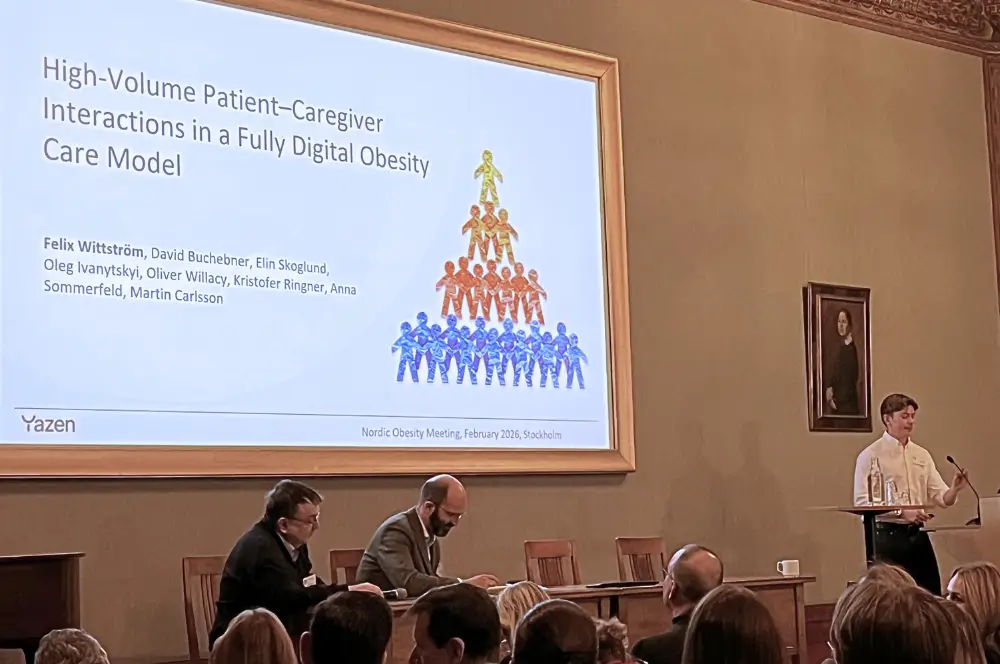
Yazen was pleased to contribute to the scientific programme with new real-world data illuminating the scale and frequency of patient engagement in a fully digital obesity care model.
Scientific presentation at NOM2026:
“High-Volume Patient–Caregiver Interactions in a Fully Digital Obesity Care Model”
Presenter: Felix Wittström, MD, Yazen Health AB
The presentation was based on longitudinal data collected over three years (156 weeks) from Yazen’s digital platform. The analysis quantified all interactions between patients and their multidisciplinary care team — including physicians, dietitians, physiotherapists, health coaches and psychologists, and tracked patient-reported weight entries.
Key findings included:
- Data from more than 50,000 patients in treatment over three years
- 7.7 million messages exchanged between patients and caregivers, corresponding to an average of 5.5 messages per patient per week
- 2.3 million recorded weight entries, equivalent to approximately one weight registration per patient per week
- High retention rates, with around 70% of patients remaining in treatment after 12 months, 57% after 24 months and 53% after 36 months
These findings illustrate how continuous digital access to professional support enables frequent communication, structured self-monitoring and sustained engagement, all essential components of effective long-term obesity management.
Read the full abstract here: High-Volume Patient–Caregiver Interactions in a Fully Digital Obesity Care Model
Scientific Insights Shaping Modern Obesity Care
Several scientific themes discussed at NOM2026 closely align with Yazen’s integrated approach.
Paediatric obesity was consistently framed as a chronic, relapsing biological condition. Speakers emphasised that lifestyle interventions alone often yield modest results in severe cases, while pharmacological treatment, particularly GLP-1 receptor agonists, is playing an increasingly important role in earlier and more active management strategies. Importantly, medication was described as a tool to reduce biological resistance and enable behavioural change, not replace structured support.
Long-term Nordic data on bariatric surgery demonstrated durable weight loss and sustained metabolic benefits. However, speakers emphasised that surgery requires lifelong follow-up and does not automatically resolve psychological challenges. Medication and surgery were framed as complementary tools within a comprehensive treatment spectrum.
Sleep and circadian biology also emerged as clinically relevant dimensions of obesity care. Even short-term sleep deprivation was shown to impair insulin sensitivity and glucose regulation, influence appetite and negatively affect body composition during weight loss efforts. These findings underline that sleep is not merely a lifestyle detail but a treatment-relevant factor.
Behavioural patterns such as night eating syndrome were highlighted as under-recognised contributors to obesity, with links to emotional distress and reduced quality of life. Structured follow-up and personalised support were repeatedly emphasised as essential for long-term success.
Revolutionising Obesity Care: The Yazen Model
The discussions at NOM2026 reflect a broader shift towards chronic disease management models in obesity care.
Yazen’s integrated model combines:
- Evidence-based pharmacological treatment
- Individualised dose optimisation
- Structured behavioural and lifestyle support
- Continuous digital follow-up and engagement
- A long-term perspective focused on sustainable outcomes
By enabling frequent interaction, proactive monitoring and adaptive treatment strategies, digital care supports personalised management at scale and strengthens adherence over time.
Emerging Trends and Future Directions
Several clear trends emerged from the meeting:
- A shift from short-term weight reduction towards long-term disease management
- Increasing emphasis beyond BMI, including metabolic health and quality of life
- Earlier intervention across the lifespan
- Recognition of sleep and circadian health as clinically significant
- The growing role of digital health in improving accessibility and continuity of care
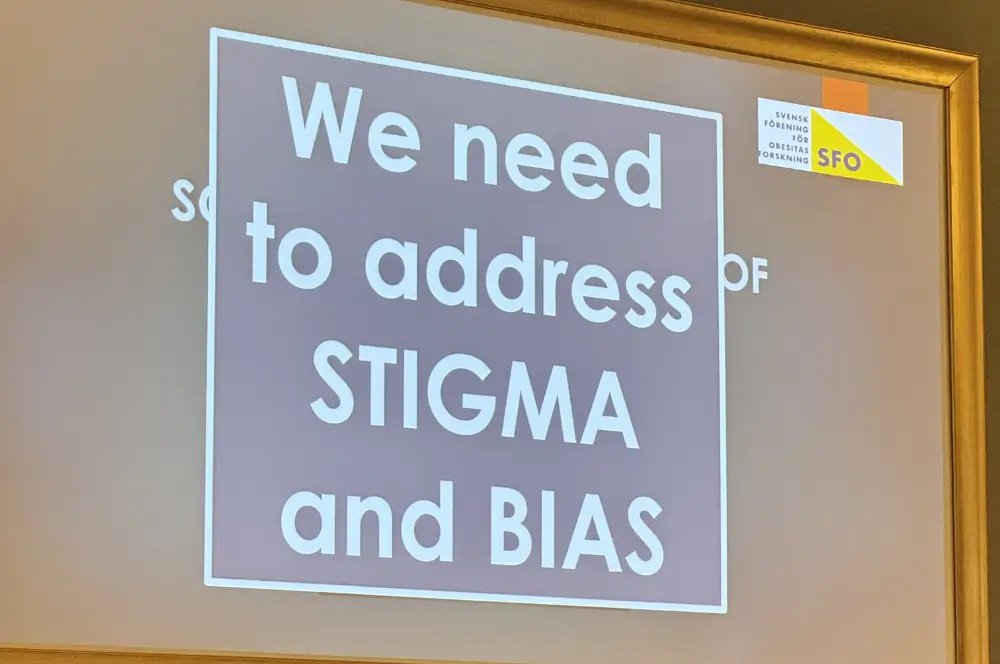
- Continued efforts to reduce stigma through respectful, person-first communication
Together, these developments signal a healthcare landscape that is becoming more personalised, more sustainable and more biologically informed.
Yazen’s Ongoing Commitment
As NOM2026 concluded, one message was clear: the future of obesity treatment in the Nordic region will be more personalised, more digitally supported and more long-term in focus.
Yazen remains committed to advancing this development by integrating emerging scientific evidence into our digital platform, strengthening structured follow-up and expanding access to evidence-based obesity care across Europe. Through continued innovation and collaboration, we aim to support sustainable health improvements — always with the patient’s lived experience at the centre.
Obesity care is evolving, and digitally enabled, patient-centred models will play a defining role in shaping what comes next.
References:
- Nordic Obesity Meeting 2026 programme (Stockholm, 5–6 February 2026)
- High-Volume Patient–Caregiver Interactions in a Fully Digital Obesity Care Model
Follow Yazen on LinkedIn for the latest Scientific Updates and News in the Obesity area!

February 20, 2026
May 19, 2026
Start your weight loss journey with Yazen today
Everything you need to do is to create an account and answer some questions about your health
.svg)
.svg)
More articles
.webp)

Real-World Outcomes of Tirzepatide and Semaglutide in 40,000+ Patients
Sustained Real-World Weight Loss in 40,000+ Patients
Substantial weight loss was achieved with GLP-1–based pharmacotherapy within a comprehensive digital obesity care model. Outcomes were maintained up to 24 months, with 57% of patients still in treatment, demonstrating strong long-term effectiveness in real-world care.
Examining the effectiveness of a new digital care model on weight loss for people living with obesity
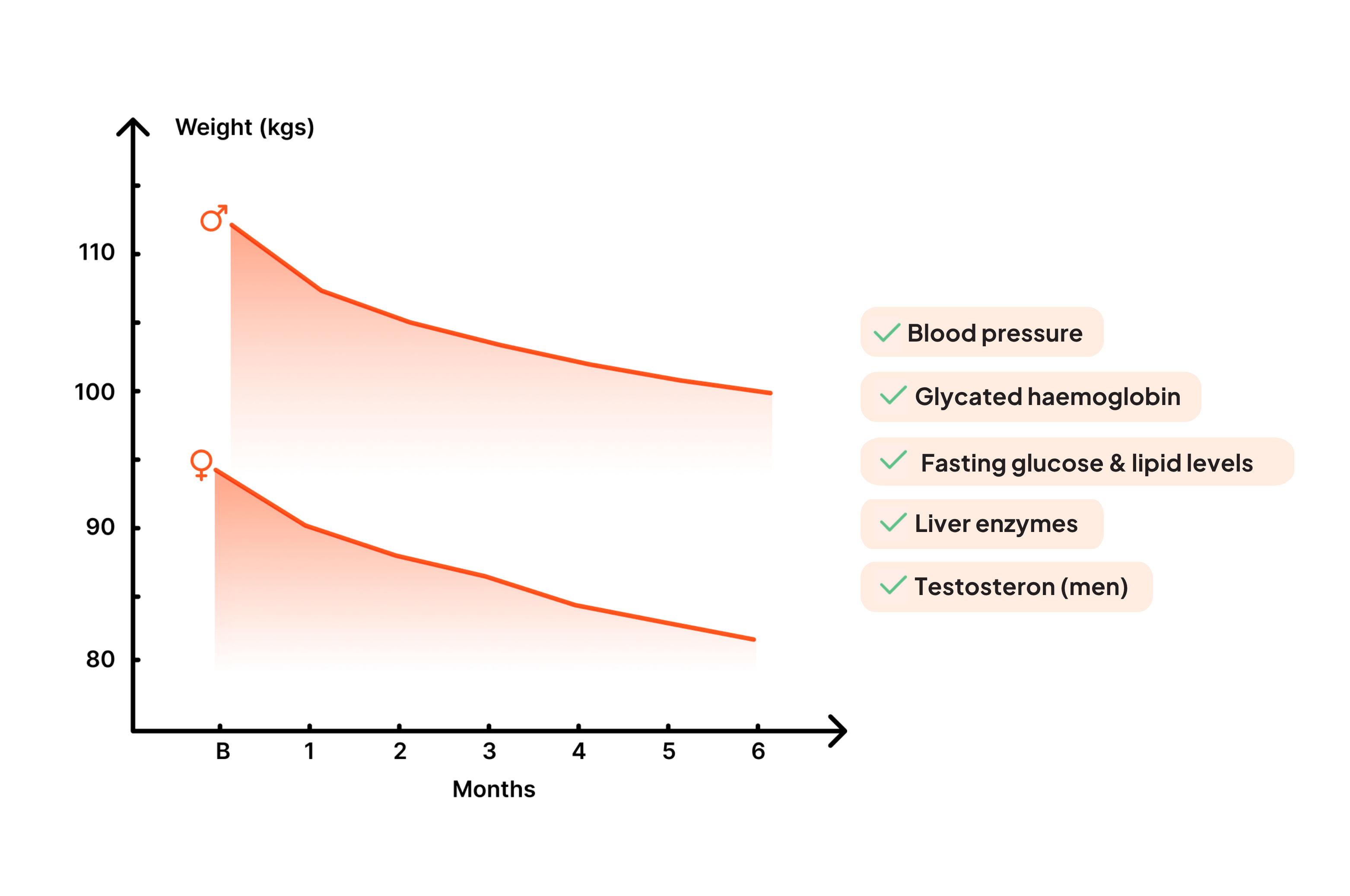
This real-world evaluation of more than 2,600 patients in Sweden showed that Yazen’s comprehensive digital obesity care model achieved 12.6% weight loss after 6 months, alongside significant improvements in cardiometabolic health markers. The model combines GLP-1 treatment, lifestyle intervention, and continuous multidisciplinary support through a digital platform designed for long-term obesity care.
.webp)
High-Volume Patient–Caregiver Interactions in a Fully Digital Obesity Care Model
Digital obesity care enables high levels of patient–caregiver interaction and sustained engagement in treatment, with higher retention than in other settings, potentially supporting longterm outcomes.
Across three years, messages exchanged, weight entries logged and retention in treatment was quantified for more than 50,000 patients.